


Quick answer: The most important AI video questions for enterprise teams (and how they can use it) aren’t just about the AI itself. They’re about the broader video technology strategy: business outcomes, ease of production, AI capabilities, responsible AI, and personalization at scale.
Asking the right AI video questions early helps enterprise leaders choose a platform that delivers measurable results, not just another content creation shortcut.
AI video tools are everywhere right now. From social media reels and AI avatars to celebrity mashups and AI-generated explainers, the category has exploded.
For businesses, of course, video content is already a valuable tool, one that’s baked into a number of use cases across CX, marketing, sales and more. According to Wyzowl’s State of Video Marketing Report, 91% of businesses now use video as a marketing tool, and most are actively expanding where and how they activate it.
But here’s the catch for enterprise leaders: the vast majority of AI video tools on the market weren’t built for the business outcomes you’re looking to achieve. What they can do is make it faster and easier for an individual to produce a short clip for social media. That’s a real and valuable use case, but it’s a very different problem than helping a financial institution onboard hundreds of thousands of new customers, or helping a SaaS company drive feature adoption across its entire base.
Enterprise video is a different game. It requires brand governance, dynamic personalization, secure data handling, and the ability to scale across every team in the business. As this post on AI video marketing tools explains, AI is the accelerator, but the platform is what makes it work for large companies.
That’s the frame to keep in mind as you evaluate options. In today’s market, any modern video platform worth considering should have AI capabilities built in. The AI video questions below can help non-video experts across your organization cut through the hype and pick a platform that drives real business value.
Business strategy and outcomes questions
Start here. The right platform matters far less if you haven’t aligned on why you’re using AI video in the first place.
1. What specific business outcomes are we trying to drive?
Get specific about engagement, retention, adoption, pipeline, or cost-to-service. Vague goals like “we need more video” won’t get you there. (Though don’t get me wrong – more video is good!). Tie each video use case to a KPI your leadership already tracks.
2. Where in the customer or employee journey could video have the biggest impact?
Look for high-attention, high-drop-off moments: onboarding, renewal, major policy changes, product launches, benefits enrollment. These are the moments where personalized, AI-enriched video consistently outperforms static content.
3. Which teams across the enterprise would benefit most?
CX, marketing, sales, HR, product, and internal comms all have strong use cases. Mapping stakeholders early helps you build a platform business case, not just a single team’s pilot.
4. What existing content is underperforming that could be more effective as video?
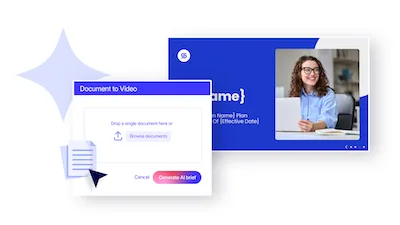
PDFs nobody reads, emails nobody opens, knowledge-base articles collecting dust. Each is a candidate to replace or complement with a short, AI-powered video that actually earns attention.
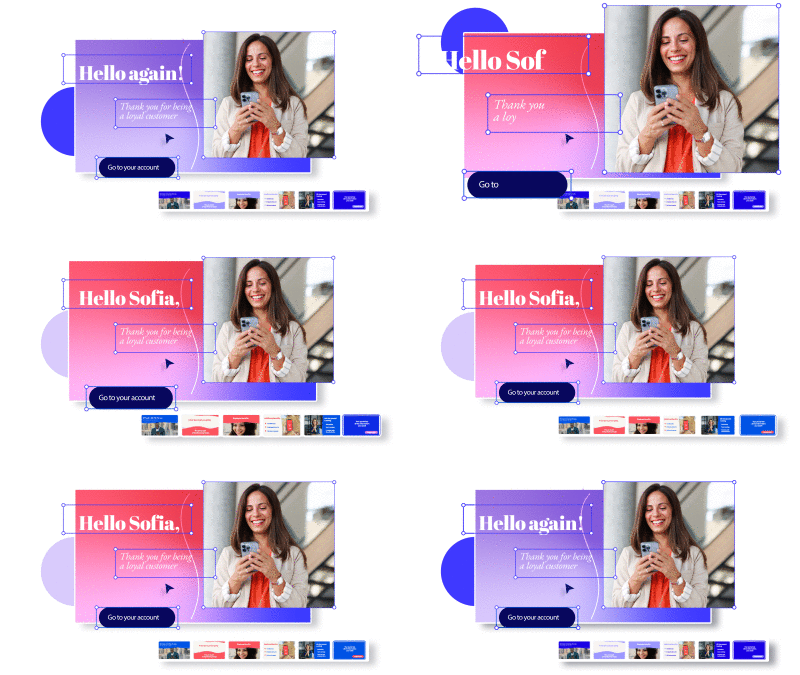
5. How will we measure success, and what baselines do we have today?
Nail down your baselines before launch: open rates, completion rates, click-throughs, CSAT, NPS, conversion. You can’t prove impact on the way out if you didn’t measure on the way in.
Production and ease-of-use questions
This is where AI earns its keep for enterprise teams, by removing the traditional friction of video production without adding new kinds of risk.
6. Can non-video experts on our team actually create, edit, and launch videos themselves?
If it takes a creative team or an agency to make every video, your program will cap quickly. Look for a platform where marketers, CS managers, and product teams can self-serve within brand guardrails.
7. How quickly can we go from idea to published video?
Enterprise teams can’t wait weeks for a single video. AI-enabled platforms should be able to compress production from weeks to hours (or less), making video an even more viable format for everything from campaign launches to renewal reminders.
8. How easily can we update or create variations after launch?
Your content will need to evolve. Say you need to make a change to a pre-published video. An enterprise platform with real-time rendering lets you update a data point, a message, or a visual once and have it reflected across every viewer’s experience immediately – with AI voices that adjust the narration dynamically as needed.
9. Can we produce a high volume of videos without sacrificing quality or brand consistency?
“Do more with less” is now the standard mandate. The right platform lets teams scale output without diluting brand, and without layering in more review cycles. In other words, AI helps you generate the video, but you still maintain control.
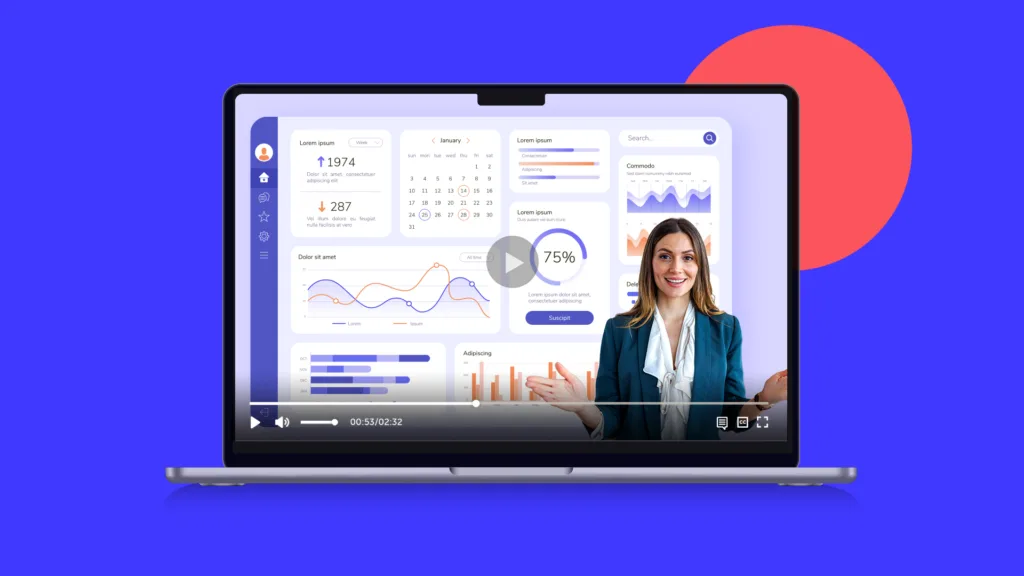
Watch now: SundaySky’s platform for fast, easy video creation
AI video capability questions
These focus specifically on what the AI under the hood can actually do for an enterprise team (versus what’s being marketed for individual creators).
10. What types of AI video generation does the platform support, and are they the right kind for our use cases?
“AI video” can mean lots of different things. Some platforms focus on text-to-video generation for social posts. Others center on AI avatars or talking-heads.
Enterprise platforms typically combine multiple AI approaches: AI-assisted scripting, dynamic scene assembly, text-to-speech, automated translations, and so on. The goal should be to match the AI to your actual business use case, not to chase the feature list with the loudest buzz.
11. Can AI help with scripting, scene assembly, voice, and translation?
This is where modern AI video shines. SundaySky’s AI video capabilities, for example, accelerate every step from concept to launch, including AI-assisted scripting, scene generation, voice, and multi-language localization. The goal isn’t “AI does everything.” It’s “AI removes the manual work so your team focuses on the message and the outcome.”
12. How realistic are AI avatars, and can we customize them?
These days? Pretty realistic! If your use case calls for AI avatars, ask for real examples and whether you can create custom avatars that feature your own people, rather than a stock library alone. Enterprise-caliber AI avatars should elevate your brand, not make you look generic.
13. Does the AI support personalization, not just creation?
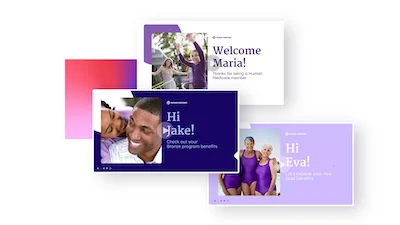
AI that helps you make a video is useful. AI that also helps you personalize video dynamically at scale is transformational. For example, AI voice narrations can auto-personalize messages for different audiences – a far more practical approach then the (frankly impossible) alternative of recording custom voiceovers for different viewers.
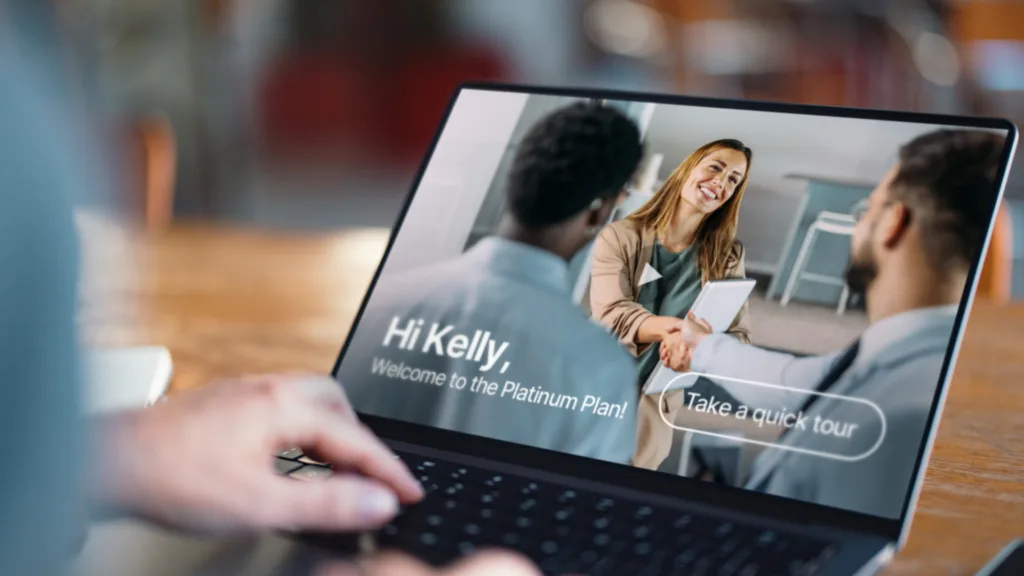
See what an enterprise-grade AI video platform looks like. Take a platform tour →
Responsible AI video and data protection questions
Enterprise AI video isn’t just about what the AI can do. It’s also about what it should do, and how it treats your data.
14. What human oversight and approval controls exist for AI-generated content?
AI should accelerate your team, not replace your judgment. Look for platforms with built-in review, approval, and editing workflows so teams stay in the loop. The best AI video platforms balance speed with structured human checkpoints, especially for regulated or customer-facing content.
15. How do I manage AI ethics, transparency, and responsible use?
Regulations and consumer expectations around AI-generated content are evolving quickly. Be sure to take steps in support of responsible AI use, which may include clear guidance on disclosures where appropriate, consent frameworks, and safeguards against misuse of avatars or voice.
16. Are AI video features optional?
There’s a difference between utilizing AI and being completely reliant on it. While some AI capabilities (like voice narration) may be baked into a solution, the strongest platforms should be simple to use on their own. That means any user should (ideally) be able to create video content quickly and easily themselves if they choose to, without AI at all
Personalization and scale questions
This is where consumer AI video tools may fall short. It’s also where enterprise platforms create the most business value.
17. Can videos be dynamically personalized using our own customer, product, or behavioral data?
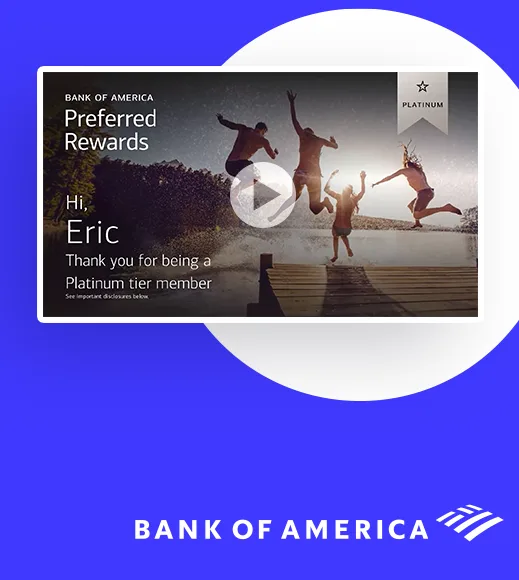
Video personalization goes beyond “Insert first name here”. You want visuals, narration, on-screen text, CTAs, and even scenes to adapt based on each viewer’s data and journey stage. McKinsey research shows companies that excel at personalization generate 40% more revenue from those activities than average players.
18. Does the platform support real-time rendering, so every view is current and on-message?
Real-time rendering means each video is assembled at the moment of play using the latest provided data or content updates. No stale balances, no outdated offers, no expired rates. This is one of the clearest value lines between consumer tools and enterprise platforms.
19. How well does it integrate with our existing technology stack?
Personalization require data access. Look for native integrations with platforms like Salesforce, HubSpot, and major CDPs, or even the ability upload simple CSV files, so you can activate personalization from the data investments you’ve already made.
20. Can we deliver true 1:1 personalized experiences?
There are degrees of video personalization, and your AI video platforms can offer flexible approaches based on your needs. Your personalized content could be:
- Contextual – One message for an entire target audience
- Segmented – Targeted messaging across defined audience groups
- Dynamic 1:1 – Real-time individualized experiences
Most important, customers want more personalized content from the brands they work with: 71% of consumers expect personalized interactions, and 76% get frustrated when they don’t.
AI makes video faster. The platform and strategy make it work.
When AI video is applied effectively within an enterprise-grade platform, video becomes faster, smarter, and more scalable. Teams can brief, build, launch, and update personalized video campaigns in a fraction of the time it would take with outsourced agencies – and at a much lower cost.
One large 401(k) plan provider, for example, used personalized video via SundaySky to drive measurable lifts in participant engagement and retention without expanding its creative team.
Research shows that 70% of consumers say video helps them feel more connected to a brand, making AI-powered, personalized enterprise video one of the highest-leverage investments an enterprise company can make.
Ask these AI video questions early and you’ll end up with more than a video tool. You’ll activate a platform that moves the metrics your business cares about most.
Want to see how SundaySky helps enterprise teams answer these AI video questions? Request a demo to get started.